VEX V5 Robotics Competition Override - Game Manual  |
Section 7 - VEX AI Robotics CompetitionGame, Robot, and Tournament RulesSection titled “Game, Robot, and Tournament Rules”The VEX AI Robotics Competition is played on the same Field as VEX V5 Override, with the same Scoring Objects and Field Elements. Two (2) Teams, one (1) red and one (1) blue, with two (2) Robots each, compete in Matches that have no Driver Controlled Period. Each Match consists of a fifteen (0:15) second Isolation Period followed by a one minute and forty-five second (1:45) Interaction Period, and Robots operate autonomously for the entire Match. All rules in Sections 1 through 5 apply to VEX AI Teams unless modified by the rules in this section. Student eligibility, Team makeup, and participation on more than one Team or in more than one program are governed by the Student Eligibility Policy; See rule G4. Official rules clarifications for the VEX AI Robotics Competition come only from its own Q&A at events.vex.com, not the VEX V5 Q&A. VEX AI Robotics Competition: Game Design PhilosophySection titled “VEX AI Robotics Competition: Game Design Philosophy”An open letter to every Team entering the VEX AI Robotics Competition, and to every Head Referee who will call its Matches: Override is a stacking game, and AI Robots can be unpredictable. We know those two things can work against each other. Stacks of Pins and Cups fall over in VRC Matches with a driver at the controls; they will fall over in VEX AI Matches, where no one is at the controls. Section 7 is written with that in mind, and so is this letter. Teams: we want you to be as productive as you can be. Override gives an autonomous Robot more to do than any previous game: sort Pins by color, read the AprilTag on each Goal to know where it is, find a Loader, choose a Goal, and more. That is what this competition is for. Two Teams doing those things is a good Match, even if stacks are on the floor when it ends. Toggles are a contest this game designed in. Setting one to your color changes who owns the yellow Pins in that Quadrant; it is a scoring action the game invites, and it leaves every stack standing. Knocking stacks down is not a scoring action, and a Robot coded to do it is where the grace in this letter runs thin. Head Referees: a driver can see a stack start to tip and back off, or see a Match going sideways and change the plan on the fly. Giving a Robot that same judgment is one of the hardest problems in this competition, and every Team is still learning the intricacies of driving autonomously around other Robots, moving Scoring Objects, and Field Elements. Contact with stacks will happen, and on its own it is rarely a Violation. A Robot that disturbs a stack while scoring, driving to a Loader, or working a Toggle is playing the game, and so is a Robot that was knocked off course by another. We are asking you to start from the understanding that a Robot which removes points from the Field most likely did not mean to, to use your best judgment, to extend grace wherever you can, and to treat Disqualification as a last resort. The clearest cases for a call are an especially egregious action, a Team that plays a purely defensive strategy, or a Robot that repeats the same destructive action Match after Match. See VAIG3. To both of you: this is not a loosening of the standard. It is a handshake. Teams compete knowing that the other Robots are also unsupervised, that unintended things will happen, and that a strange Match is a normal Match. Head Referees call Matches knowing that the Team in front of them was, far more often than not, trying to score. Our hope is simple: more VEX AI Matches that end with points on the board for both Teams, earned by Robots that were trying to score, and fewer that end in a Disqualification nobody wanted. Build your points up. Do not knock the other Team’s down. VEX AI DefinitionsSection titled “VEX AI Definitions”Isolation Period - The first fifteen (0:15) seconds of a VEX AI Head-to-Head Match. Any rule that references the Autonomous Period applies to the Isolation Period. Interaction Period - The one minute and forty-five second (1:45) period that follows the Isolation Period in a VEX AI Head-to-Head Match. Any rule that references the Driver Controlled Period applies to the Interaction Period. Robots remain autonomous during the Interaction Period; see VAIG2. Isolation Bonus - The VEX AI equivalent of the Autonomous Bonus. Any rule that references the Autonomous Bonus applies to the Isolation Bonus. See VAISC1 for more information. Isolation Win Point - The VEX AI equivalent of the Autonomous Win Point. Any rule that references the Autonomous Win Point applies to the Isolation Win Point. See VAISC2 for more information. Isolation Points - The VEX AI equivalent of Autonomous Points, used for Qualification Match rankings. Any rule that references Autonomous Points applies to Isolation Points. In the VEX AI Robotics Competition, an Alliance is one Team with two Robots. Rules VUT1 and VUR1 apply; see VAIT1 and VAIRM1. Any rule that references an Alliance partner, or the other Team on an Alliance, applies to the Team’s second Robot. Rule Modifications: Field SetupSection titled “Rule Modifications: Field Setup”The VEX AI playing Field is set up differently than a Head-to-Head VEX V5 Robotics Competition Override Match, with the following modifications:
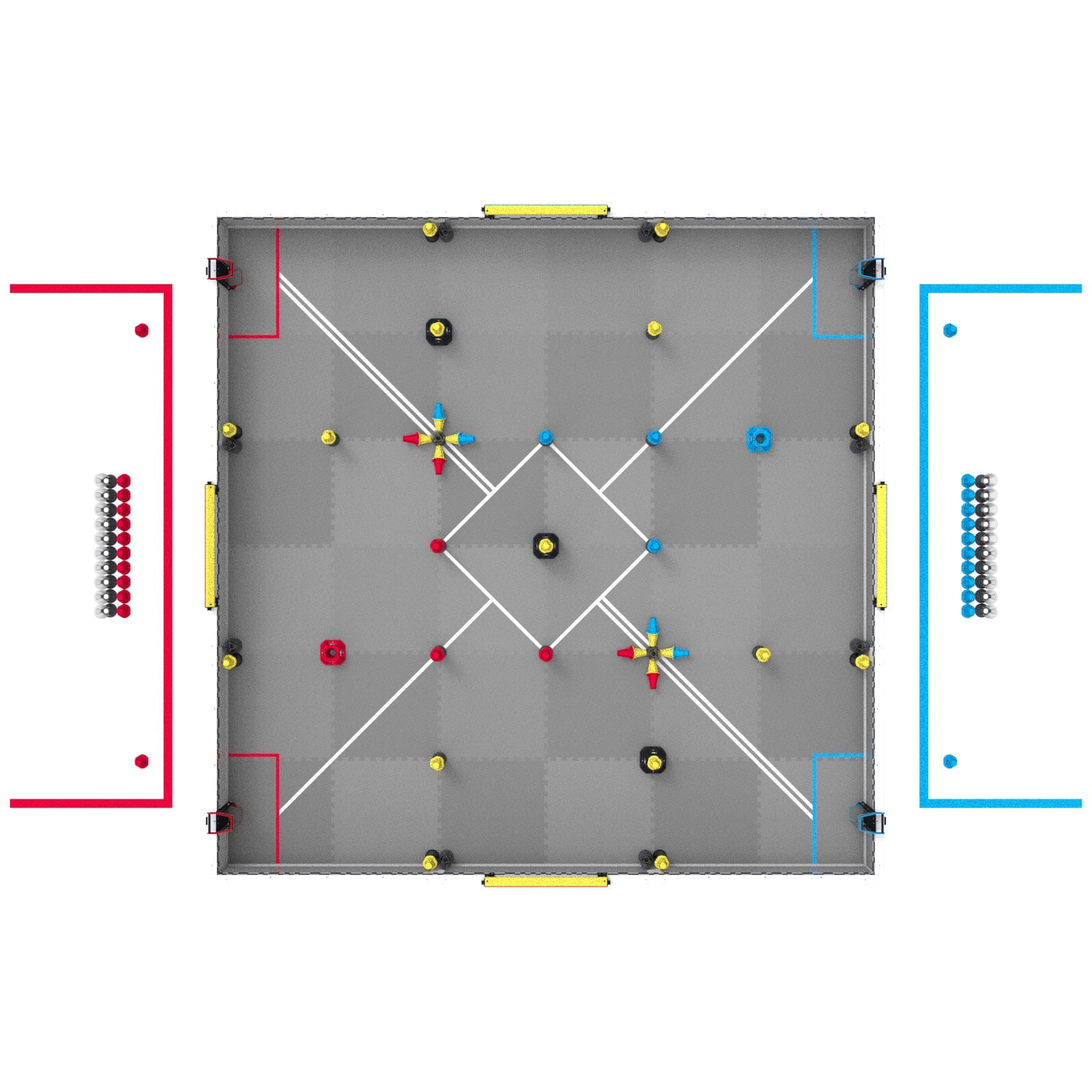
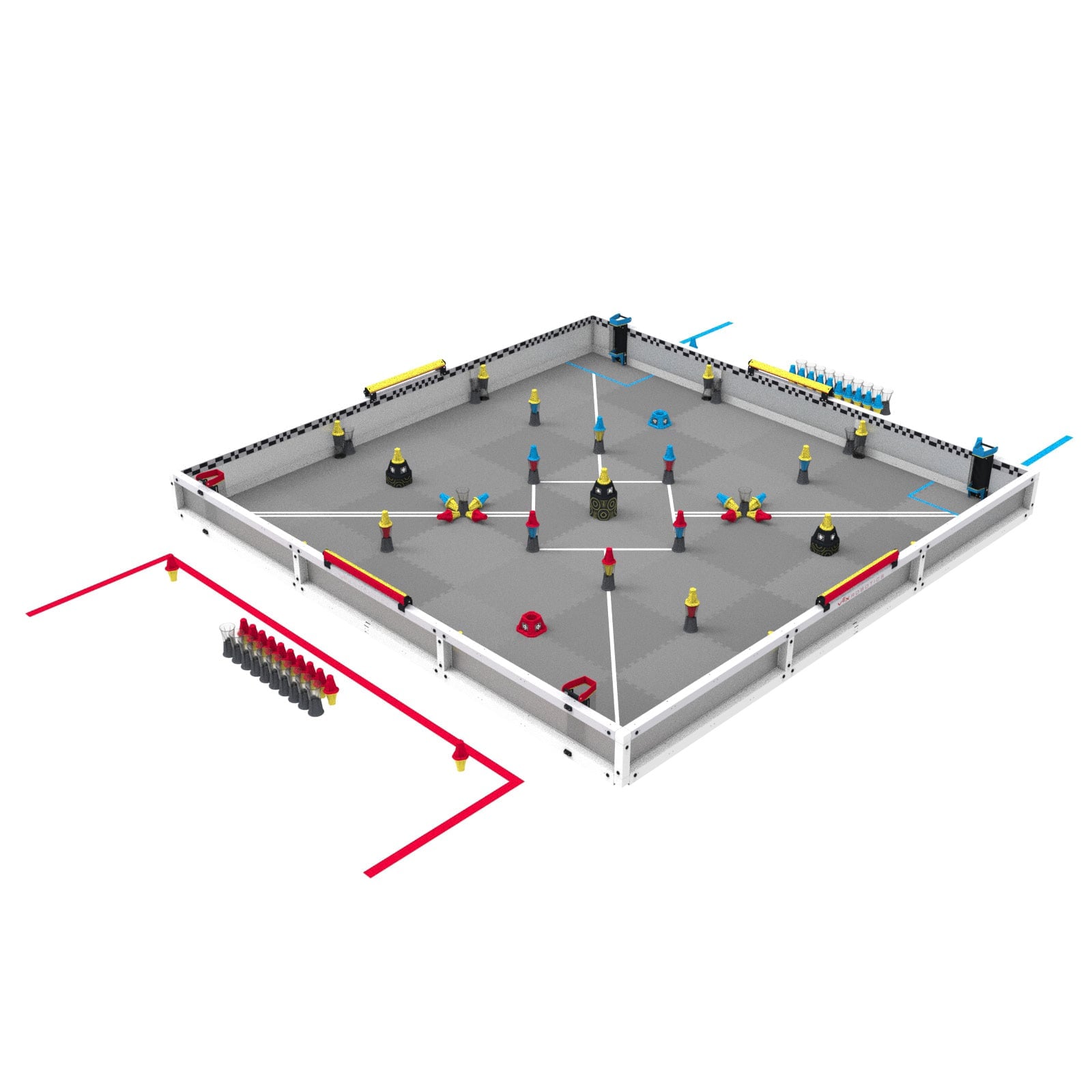
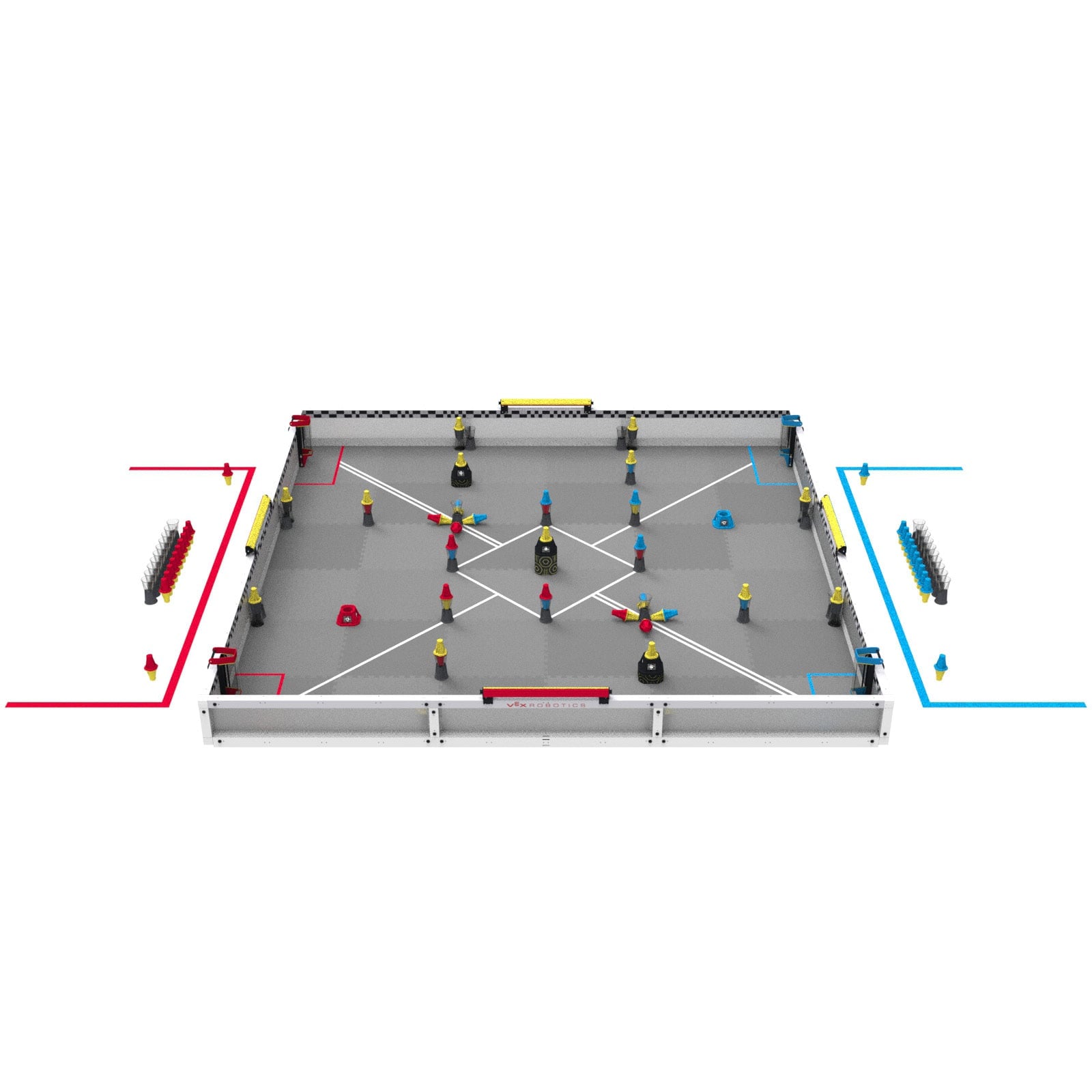
The VEX AI Head-to-Head Field consists of the following:
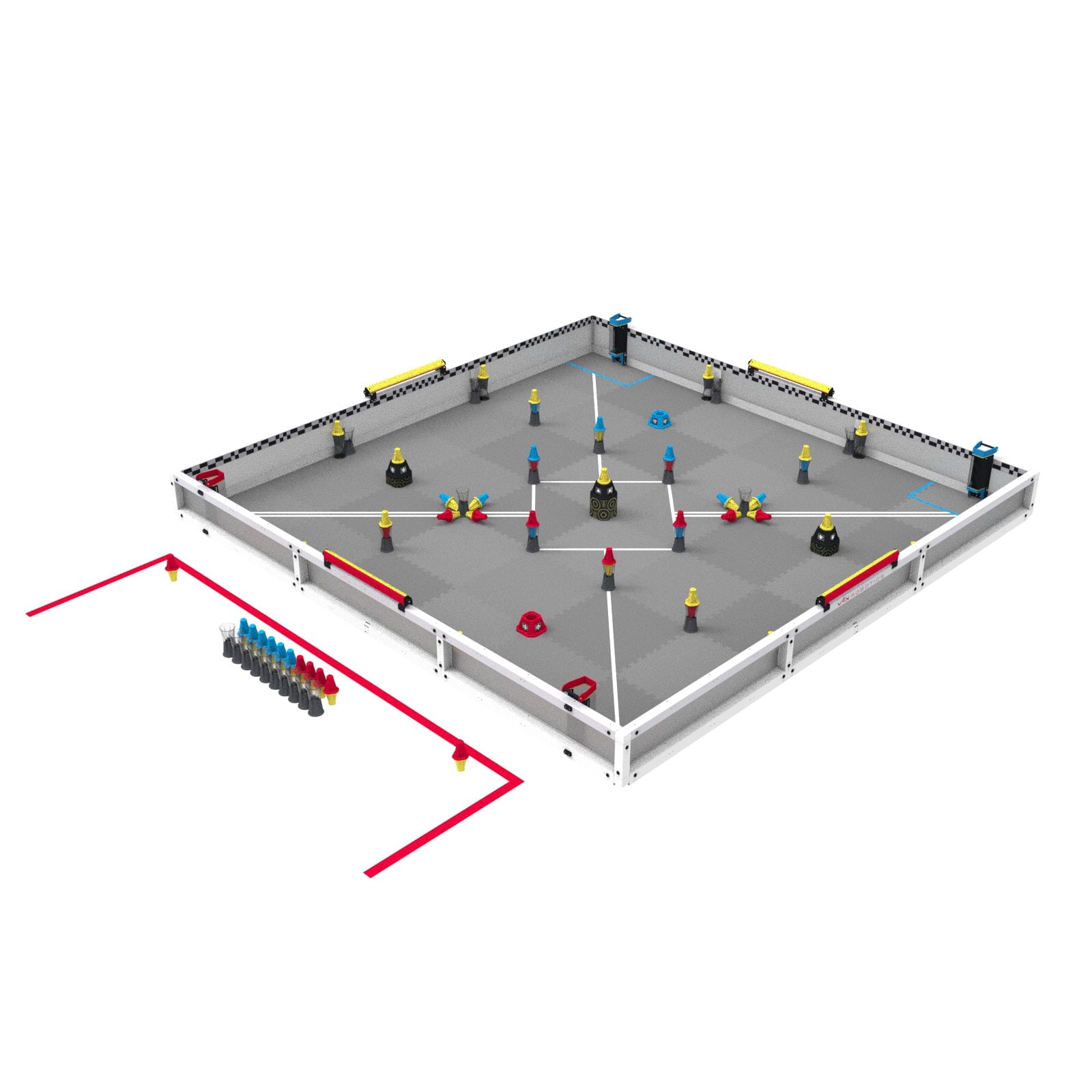
Figure VAI-1: An overhead view of the VEX AI Head-to-Head Field in its starting configuration.
Figure VAI-2: An isometric view of the VEX AI Head-to-Head Field in its starting configuration.
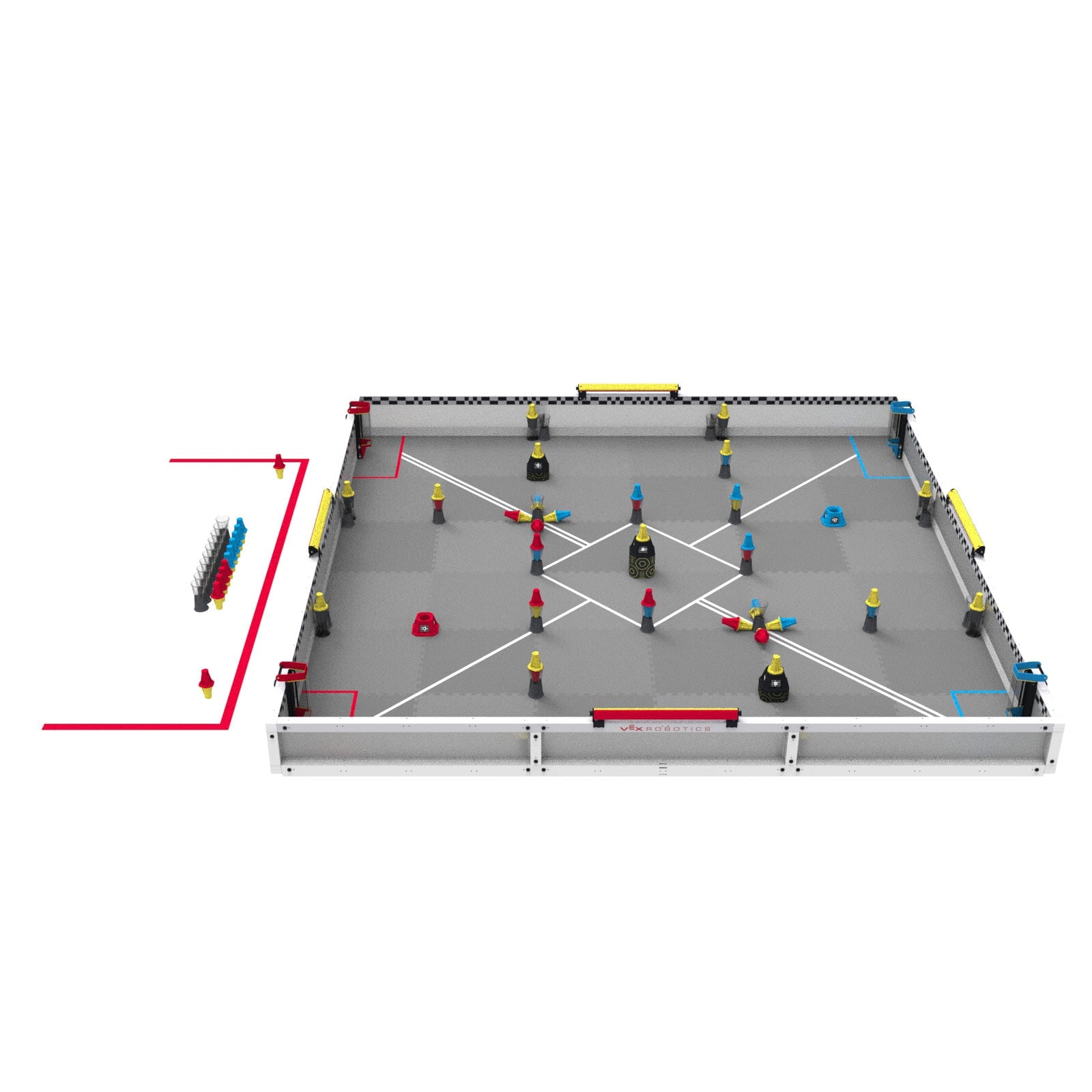
Figure VAI-3: A side view of the VEX AI Head-to-Head Field in its starting configuration, from the audience side. VEX AI Robot Skills Matches use the same Field layout, with the Match Load and Preload modifications in VAIRS3. Rule Modifications: ScoringSection titled “Rule Modifications: Scoring”<VAISC1> Isolation Bonus criteria. Rule SC7 applies as written to the Isolation Period. The Isolation Bonus is worth twelve (12) points, the value listed for the Autonomous Bonus in the Scoring table in Section 2. Rule VUG5 does not apply to VEX AI. <VAISC2> Different Isolation Win Point criteria. Rule SC8 is applied differently for VEX AI. An Isolation Win Point is awarded to any Alliance that ends the Isolation Period with all of the following tasks completed, and that has committed no Violations during the Isolation Period:
These criteria apply at all VEX AI events. Rule VUG6 does not apply to VEX AI. Rule Modifications: GameSection titled “Rule Modifications: Game”<VAIG1> Standard game rules apply. All Scoring, Specific Game, Safety, General, and General Game rules in Section 2 apply to VEX AI as written, using the VEX AI Definitions, except as modified in this section. The following VEX U Game rules also apply as written: VUG2 and VUG3. Rules VUG1, VUG4, VUG5, and VUG6 do not apply to VEX AI. <VAIG2> Autonomous means “no humans” for the entire Match. Rule GG12 applies during both the Isolation Period and the Interaction Period. Drive Team Members may not interact with Robots, Field Elements, or Scoring Objects in any way, directly or indirectly, at any time during a Match, except as noted below.
Violation Notes:
<VAIG3> Use common sense, and give grace. Rule G3 applies to VEX AI with added weight. Teams do not control their Robots during a Match, and a Robot will sometimes do something its Team did not intend. Unintended actions are part of this competition, not Violations.
Violation Notes:
<VAIG4> Robot starting sizes, positions, and expansion. Rule VUG1 does not apply to VEX AI. For the purposes of <SG1a>, each Robot must be within its starting size per VAIRM2. Rule SG1 otherwise applies as written: Robots start in the same positions as in a VEX V5 Head-to-Head Match, contacting the Field tiles and Field Perimeter on their Alliance’s side of the Autonomous Line, in separate Quadrants. See Figure SG-1. Rules SG2, SG3, and SG12 apply as written; there are no VEX AI modifications to expansion limits. <VAIG5> Loaders and Match Loads. Rule SG11 applies as written, with the Interaction Period in place of the Driver Controlled Period.
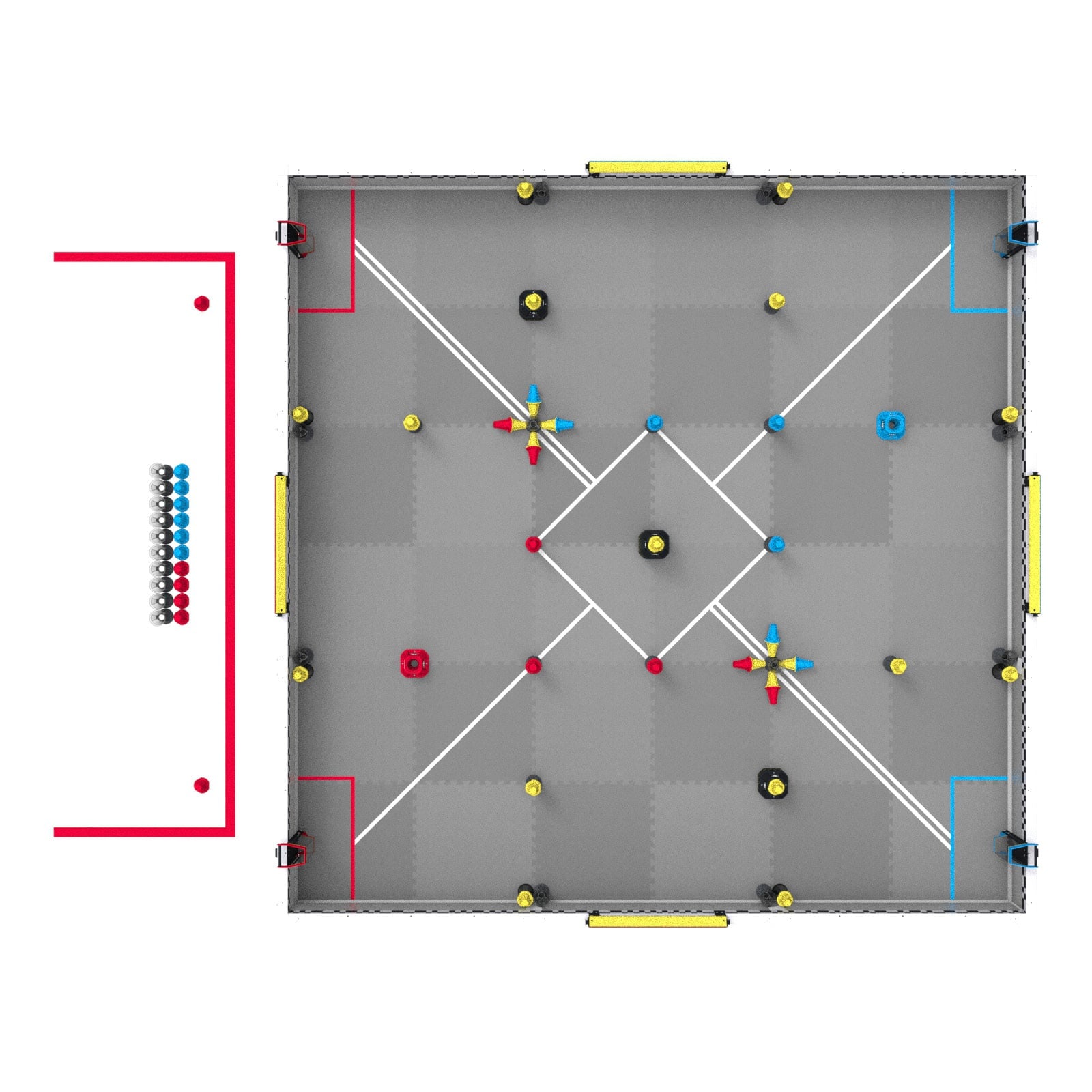
Scoring Objects that leave the Field are returned per SG4 by event volunteers, not by Drive Team Members. Rule Modifications: Robot Skills ChallengeSection titled “Rule Modifications: Robot Skills Challenge”<VAIRS1> Standard rules from VEX V5 and VEX U apply. Rules RSC1 through RSC5 apply as written, with the modifications below. The following VEX U Robot Skills Challenge rules also apply as written: VURS2 and VURS3. Rule VAIG2 applies for the entire Robot Skills Match. <VAIRS2> VEX AI Teams compete only in Autonomous Coding Skills Matches. There are no VEX AI Driving Skills Matches. Rules T22 and T23 apply as written, with each Driving Skills Match score treated as zero (0). If an event chooses to run a deciding Match under T22, it is an Autonomous Coding Skills Match. <VAIRS3> VEX AI Robot Skills Matches use the same Field layout as VEX AI Head-to-Head Matches. The Field is set up as described under Rule Modifications: Field Setup, including the VEX GPS code strip (see rule RSC4) and a yellow/yellow Pin Placed on each neutral Goal, with the following modifications:
<VAIRS4> Scoring VEX AI Robot Skills Matches. VEX AI Robot Skills Matches are scored as VEX U Robot Skills Matches: Rule RSC3 applies as written, both Robots count per VURS2, and each Robot ending the Match in the Midfield earns the points listed in the Scoring table. For the purposes of RSC3, each Quadrant has the color shown in Figure Q-1, whether or not its Alliance-colored Goal is on the Field.
Figure VAIRS-1: An overhead view of the VEX AI Skills Field in its starting configuration.
Figure VAIRS-2: An isometric view of the VEX AI Skills Field in its starting configuration.
Figure VAIRS-3: A side view of the VEX AI Skills Field in its starting configuration. Rule Modifications: TournamentSection titled “Rule Modifications: Tournament”<VAIT1> VEX AI Head-to-Head Matches will be played 1-Team vs. 1-Team. Rules VUT1, VUT2, VUT3, and VUT6 apply as written. For every rule in Sections 2 through 5 that refers to an Alliance, the Team is the Alliance, and both of the Team’s Robots play in each Match. Rules VUT4 and VUT5 do not apply; see VAIT4 and VAIT5. For <VUT1a>, the two (2) Robots brought to the Field must satisfy VAIRM2. <VAIT2> Qualification Matches will be conducted in the same manner as in a VEX U Tournament. Rules T10 through T13 apply as written, with Isolation Win Points and Isolation Points in place of Autonomous Win Points and Autonomous Points. Teams are ranked by the following, in order:
<VAIT3> Elimination Matches will be conducted in the same manner, but without an Alliance Selection. Rules T17, T18, and T19 apply as written; rules T14, T15, and T16 do not apply. Teams are seeded into the Elimination Bracket in order of their Qualification Match ranking. At the end of the competition, one Team will emerge as the Tournament champion.
<VAIT4> The Isolation Period at the beginning of each Head-to-Head Match will be fifteen (15) seconds. Rule VUT4 does not apply to VEX AI. Any rule that references the Autonomous Period applies to the Isolation Period; see the VEX AI Definitions and VAISC1. The Isolation Period may be ended early if both Teams and the Head Referee agree. This option is available in all Matches by default and does not need to be established at the event meeting. <VAIT5> The Interaction Period will be one minute and forty-five seconds (1:45). Rule VUT5 does not apply to VEX AI. Any rule that references the Driver Controlled Period applies to the Interaction Period, and Robots remain autonomous throughout; see VAIG2. Teams may signal that they wish to end the Interaction Period early. The Interaction Period ends early only if both Teams and the Head Referee agree; this option is available in all Matches by default and is never required. Rule Modifications: RobotSection titled “Rule Modifications: Robot”<VAIRM1> VEX U Robot rules apply as written, except Robot sizes. Rules VUR1 through VUR15 apply to VEX AI Robots as written, except that Robot sizes are governed by VAIRM2. Where a VEX U Robot rule modifies a VEX V5 Robot rule, the VEX U rule controls. <VAIRM2> Different Robot sizes. Rule R3 applies to VEX AI Robots with the following volumes in place of the VEX V5 volume. One of a Team’s two Robots must fit within an 18” (457.2 mm) x 18” (457.2 mm) x 18” (457.2 mm) volume, and the other must fit within a 24” (609.6 mm) x 24” (609.6 mm) x 24” (609.6 mm) volume. A Team whose Robots both fit within the 18” volume satisfies this rule. Rule VUG1 does not apply to VEX AI. <VAIRM3> Components used for AI vision processing are Additional Electronics. Cameras, processors, and other components used for image capture, machine vision, or AI processing are Additional Electronics, and are governed by VUR12. |


↑ ↓ to move · Enter to open · Esc to close