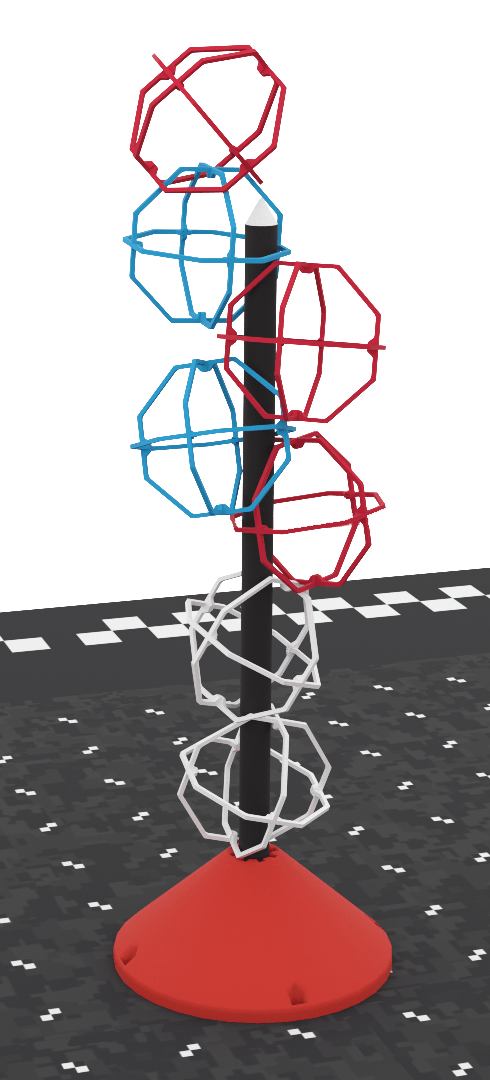
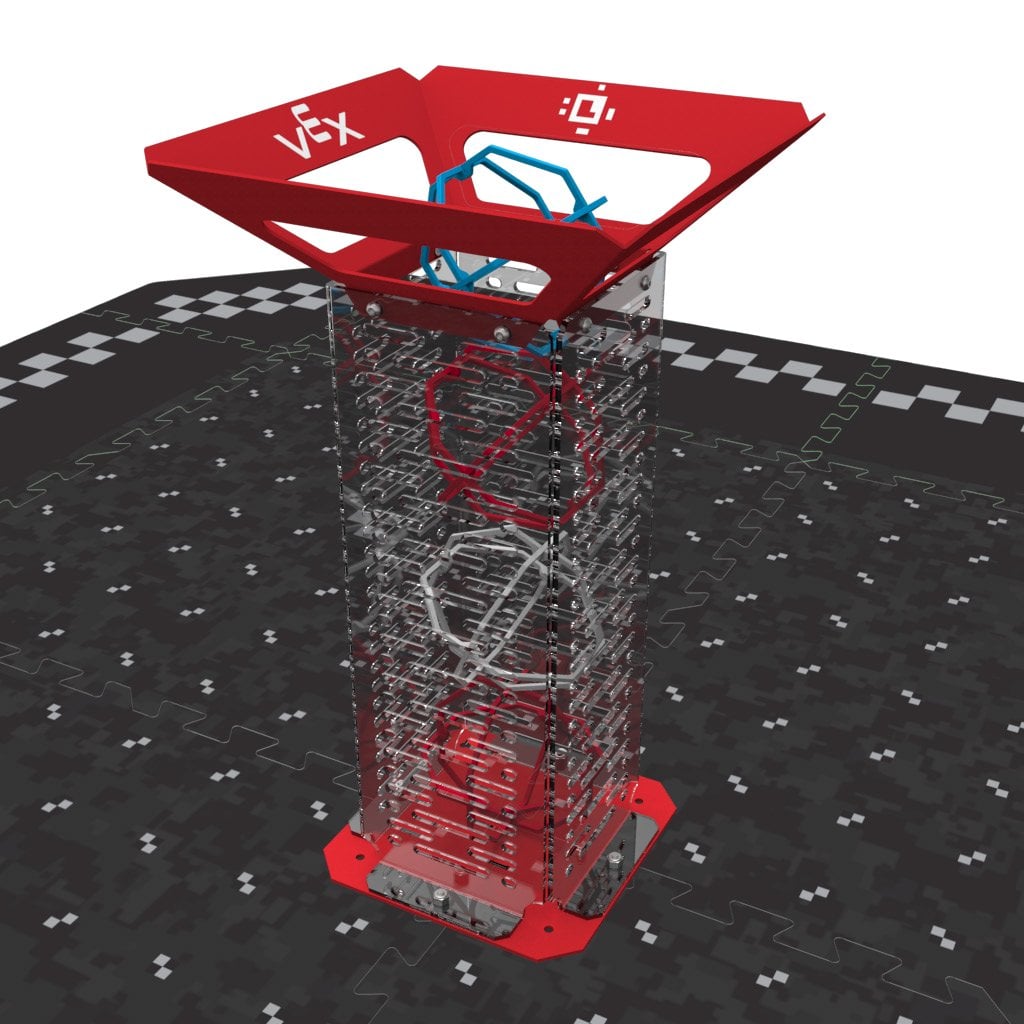
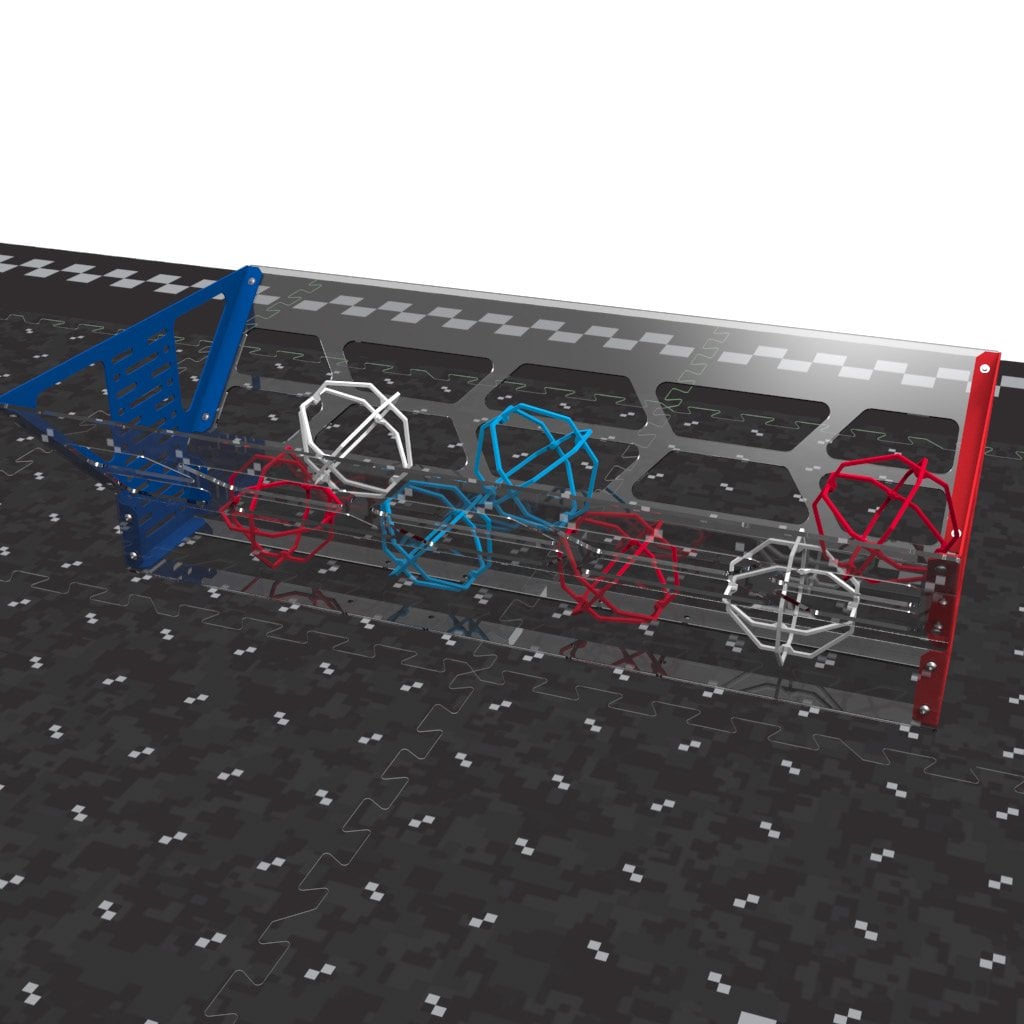
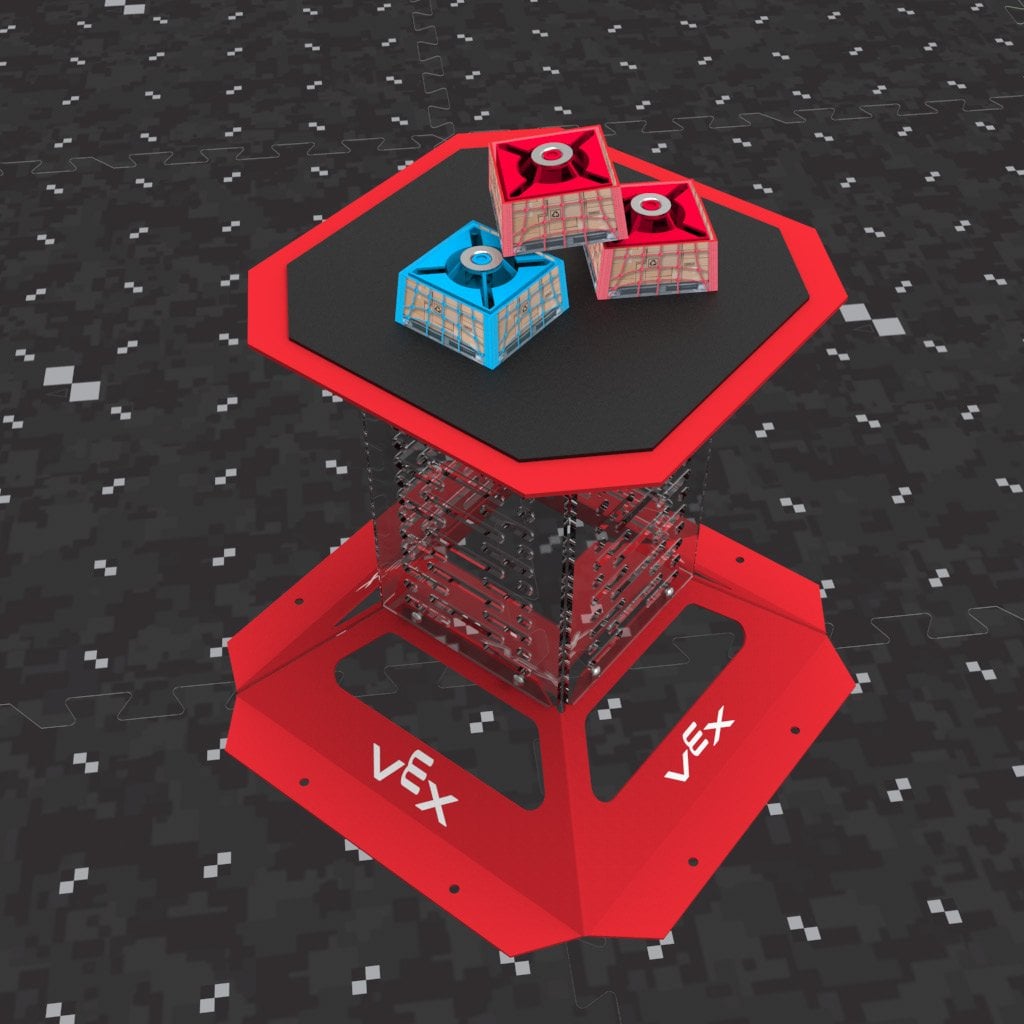
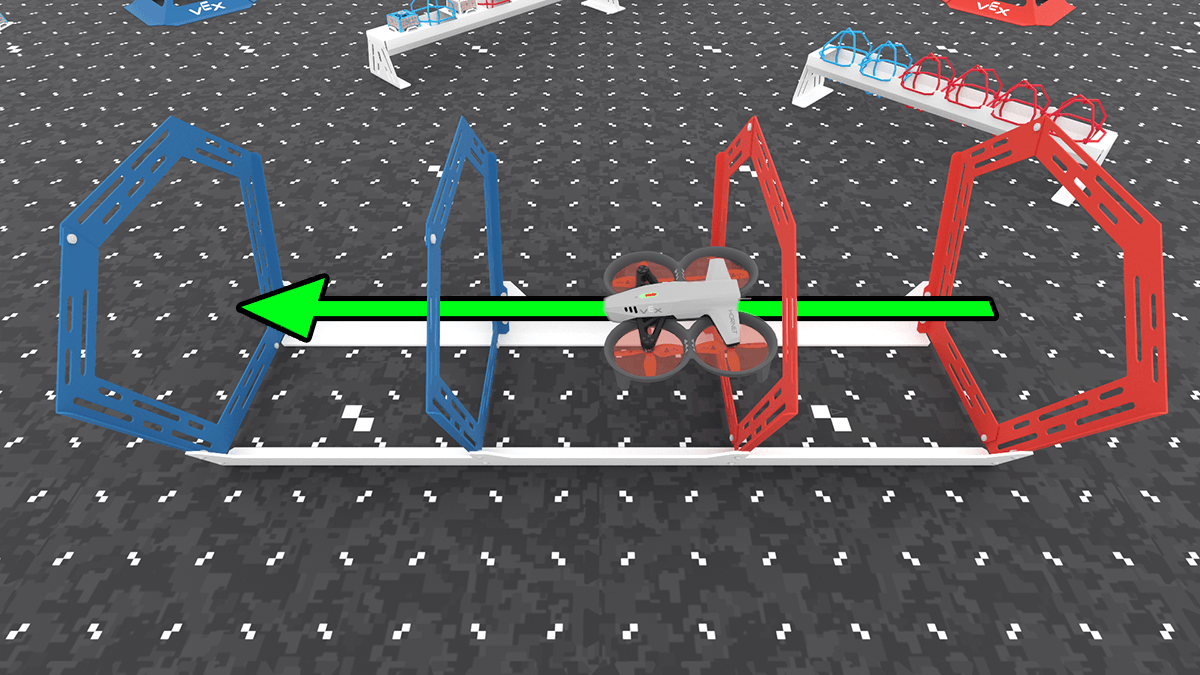
How many points each action is worth depends on the Scoring System in effect. There are six, named A to F (Table SC-1). What counts as Scored never changes; only the point values do. System A is the baseline, and Systems B to F each reward a different part of the game more. Check the Scoring System before each Match and adjust your plan.
<SC1>All scoring statuses for Scoring Objects, Goals, and Landed Drones are evaluated after the Match ends. Referees score once everything on the Field has stopped moving.
Referees try not to touch Scoring Objects while scoring. If one must be moved to check another, the Head Referee and all Teams agree on its status and record it first.
If a Match ends early, it is scored as the Field stands once everything has stopped moving. This applies to a Match ended by agreement, by a Match Abort, or by a Head RefereeE-Stop.
<SC2>Scoring status for Ring Tunnel Passes is evaluated during the Match. Referees count each Ring Tunnel Pass as it happens, up to two per Match. It doesn’t matter which Drone makes it.
<SC3>All scoring statuses are evaluated visually by a Head Referee.
Referees and event staff may not use videos or photos of the Match.
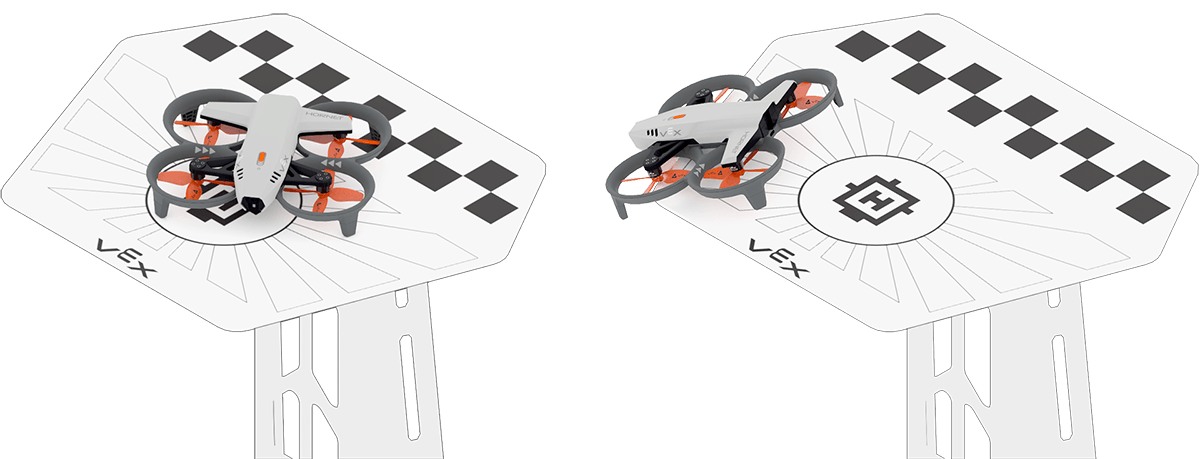
A Drone whose Pilot triggered landing from the Controller before the Match timer reached 0:00 is Landed if it comes to rest meeting a and b.
A Drone that was still flying at 0:00 is held in a hover and is not Landed, even if it is flown back to a Field Platform afterward (GG9).
A Drone placed on a Field Platform by hand is not Landed, unless it takes off again and lands itself.
Figure SC10-1: A comparison of a Drone on the Platform and considered Landed (the left image) and a Drone partially on the Platform and not considered Landed (the right image)
<SC11>Obstacle Completion Bonus criteria. At the end of the Match:
The Match won’t start until all Drones meet this rule. A Drone that can’t be ready in time is removed from the Field for that Match. This is not a Disqualification, but the Drone doesn’t play.
<SG2>Keep Scoring Objects in the Field. Any Scoring Object that leaves the Field, on purpose or not, stays out for the rest of the Match.
<SG3>A Drone may carry or control an unlimited number of Scoring Objects.
<S2>Students must be accompanied by an Adult. Every Student must be supervised by a responsible Adult who stays for the whole event in case of an emergency. The Adult must follow all rules, including the Student-Centered Policy (G2). Breaking this rule can lead to removal from the event.
A Drone that ends up outside the Field receives a Disablement, whether or not it was warned, and may not fly again that Match. It may be retrieved once the Head Referee says it is safe.
A TeamE-Stop for a safety reason, such as a Drone heading toward a person or out of the Field, is never a Violation. The Drone may fly again once it is recovered.
<S4>Wear safety glasses. All Flight Team Members wear eye protection at the Field. Safety glasses with side shields and shatterproof lenses are recommended.
<S5>Hands away when propellers are spinning. If any Drone in the Match is flying or has spinning propellers, no one may touch any Drone, including their own. Wait until all Drones are in Prop Lock (GG11). Everyone steps clear before any Drone is released from Prop Lock.
<S6>Controllers are tethered to whoever is flying. Every Controller has a lanyard attached. Whoever holds the Controller wears the lanyard whenever the Drone is out of Prop Lock, and before the Drone is released from Prop Lock or takes off. The lanyard from the kit or any other lanyard may be used.
A Drone may not fly until whoever holds its Controller is wearing the lanyard. If the Head Referee sees a Drone flying without the lanyard worn, they may tell the Team to land and enter Prop Lock until it is. Repeated or deliberate Violations may be treated as unsafe under S1.
Report a suspected Violation of any General Rule to the Judge Advisor, Head Referee, or Event Partner. After an investigation with the Global Robotics and Science Foundation and VEX Robotics, the Team may be removed from Matches, lose its Drone Skills scores, and/or lose eligibility for judged awards. Each case is reviewed individually.
<G1>Participants must follow the Code of Conduct. Everyone at an event follows the Code of Conduct.
Violation Notes:
Any Violation of G1 may be considered a Major Violation and should be addressed on a case-by-case basis. Teams at risk of a G1Major Violation due to multiple disrespectful or uncivil behaviors will usually receive a “final warning”, although the Head Referee is not required to provide one.
<G2>Participants must follow the Student-Centered Policy. Everyone at an event follows the Student-Centered Policy.
Violation Notes:
Potential Violations of this rule will be reviewed on a case-by-case basis. By definition, all Violations of this rule become Score Affecting as soon as a Drone which was configured or coded by an Adult scores points in a Match.
<G3>Use common sense. When reading and applying the various rules in this document, please remember that common sense always applies in the VEX AIR Drone Competition.
If there is an obvious typographical error (such as “per D5” instead of “per G5”), this does not mean that the error should be taken literally until corrected in a future update.
If no rule prohibits an action, it is generally legal. But if you have to ask whether something breaks S1 or G1, it is probably against the spirit of the competition.
In general, Teams will be given the “benefit of the doubt” in the case of accidental or edge-case rules infractions. However, there is a limit to this allowance, and repeated or strategic infractions will still be penalized.
This rule also applies to Drone rules. If a component’s legality cannot be easily/intuitively discerned by the Drone rules as written, then Teams should expect additional scrutiny during inspection. There is a difference between “creativity” and “lawyering.” Basically, if there’s not a rule that makes a part legal, it’s not allowed.
<G4>Students must meet the Student Eligibility Policy requirements. All Student participants must fall within the eligibility requirements set forth in the Student Eligibility Policy for their respective program and have a completed participant release form on file for the event and season.
Violation Notes:
Teams believed to be in Violation of this rule should be reported to the Judge Advisor, Head Referee, and/or Event Partner for further investigation in coordination with the Global Robotics and Science Foundation and VEX Robotics and the respective policies. The Team may be removed from further Matches, have their Drone Skills Match scores removed, and/or be removed from consideration for judged awards.
<G5>There is a difference between accidentally and willfully violating a Drone rule. A Team that breaks a Drone rule, on purpose or not, can’t play until its Drone passes inspection (D4). Breaking Drone rules on purpose to get an advantage goes against the spirit of the competition and will result in Disqualification.
Violation Notes:
A Team that circumvents a Drone rule for a competitive advantage should receive an immediate Disqualification for the current Match.
<GG2>A Team’s Drone should attend every Match. A Team’sDrone must come to the Field for each of its scheduled Matches, even if the Drone doesn’t work. If the Drone isn’t at the Field when the Match starts, the Team is a “no-show” and gets zero points. Its partner still plays and scores (see GG12d).
<GG3>Drones on the Field must be ready to play. A Drone placed on its Field Platform must be ready to go, with a charged Battery and ready for takeoff.
Place your Drone promptly. Repeated delays may break G1 and/or get the Drone removed from the Match. The Event Partner and Head Referee decide what “promptly” means, based on the schedule and any past delays.
<GG7>Match Replays are allowed, but rare. The Event Partner and Head Referee may replay a Match (play it again from the start) only in extreme cases, such as:
A Match is run before its scheduled time without a Team.
A Match that ends early because of a system fault. A Match that ends by agreement under GG12e, by a Match Abort, or by a Head RefereeE-Stop is complete. It is not replayed unless GG7d applies.
A Drone brought down for a safety reason that was not its Team’s fault. The Head Referee decides whether the Team was at fault. The Event Partner decides whether to replay the Match.
One Timeout per Match. If all Drones are in Prop Lock again later, there is no second Timeout and the Match doesn’t end; the clock keeps running. Once the Head Referee confirms all Drones are locked, Teams may handle their Drones (GG11). For example, one Drone crashes, its partner lands and enters Prop Lock, and the crashed Drone is recovered. Play restarts using GG12c.
Up to sixty seconds. The Match clock stops and the event software shows a Timeout clock. The Match clock restarts when play resumes (GG12c) or after sixty seconds, whichever comes first. If a Team is still working when time is up, it can keep going under GG11 and GG12a, but the Match clock is running.
Restarting play (during a Timeout or with the clock running):
When all Drones are released and the Head Referee confirms the Field is clear, each Team starts its program, and motor startup is initiated.
The Timeout ends early once every restarting Drone’s motors are fully powered. After the Timeout ends, each Drone can take off as soon as its motors are fully powered.
One Drone in the Match. If only one Drone is playing (a no-show under GG2, or a Drone that can’t fly), the Timeout starts the first time that Drone enters Prop Lock. After that, the Team may handle it with the clock running (GG12a) or agree with the Head Referee to end the Match (GG12e).